
Kalshi just announced Kalshi Pro. A terminal for high-frequency traders. The promise: low latency, deep order books, risk tools for perpetual futures. The reality: a system that has never faced real market stress. The math didn’t add up from the start.
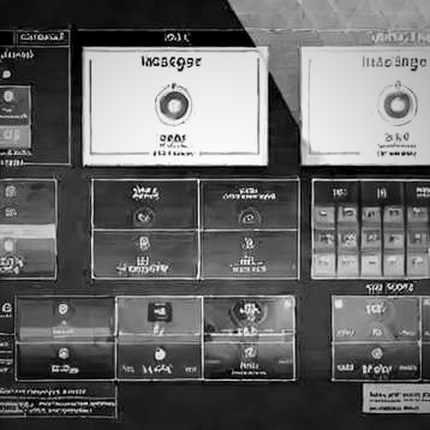
Kalshi is the only CFTC-regulated prediction market platform in the United States. It holds a Designated Contract Market license. That is its moat. Polymarket, the unregulated crypto-based competitor, dominates volume—over $500 million in monthly trading. Kalshi’s volume is a fraction of that. Kalshi Pro is an attempt to change the narrative. It targets professional traders, hedge funds, and quant firms. It offers a terminal similar to Bloomberg or Eikon, but for event contracts. The launch is still in testing. No fee structure has been announced. The strategic logic: attract high-frequency traders to generate liquidity, then monetize through volume-sensitive fees and data subscriptions.
The core insight is a systematic teardown of Kalshi Pro’s risk profile. I have spent 13 years analyzing blockchain and fintech systems. I have audited DeFi protocols that promised low latency and failed under stress. Kalshi Pro repeats the same pattern. The first critical risk is liquidity. Prediction markets are thin. The top contracts—election outcomes, Fed rate decisions—see daily volumes in the millions, not billions. High-frequency traders require deep order books. Without liquidity, Kalshi Pro is an empty theater. The terminal will have advanced charting and order book analytics, but if the bid-ask spread is wide, no professional will trade. Kalshi must attract market makers. That requires incentives: maker rebates, fee discounts, exclusive data feeds. Those costs eat into margin. The unit economics are fragile.
The second risk is operational. HFT systems are unforgiving. A single latency spike or mispriced perpetual contract can cause a cascade of liquidations. Kalshi Pro is built on a proprietary matching engine. It has not been stress-tested at scale. In my experience, every new trading platform suffers at least one major outage in its first year. Kalshi Pro will be no different. The third risk is regulatory. CFTC has not issued specific guidance on high-frequency trading in prediction markets. Kalshi operates under a DCM license, but the agency has been cautious about expanding event contracts. A flash crash or a user lawsuit could trigger an investigation. Security isn’t just about code; it’s about operational resilience. Kalshi Pro’s security posture is unknown.
Speculation masks the absence of utility. Prediction markets have real utility: they aggregate information and price future events efficiently. But high-frequency trading on event contracts is speculative in nature. The strategy is to front-run news, not to express a view. That reduces the informational value of the market. Kalshi Pro might attract trading volume, but it could also attract manipulative behavior. Wash trading, spoofing, and quote stuffing are risks in any electronic market. Kalshi’s compliance team will need to monitor for these patterns. The AML framework must be upgraded for algorithmic traders. Traditional transaction monitoring fails with high-frequency data. Kalshi has not disclosed its new surveillance capabilities.
The contrarian angle: the bulls are right about one thing—the regulatory moat is real. Kalshi’s CFTC license is a barrier to entry that Polymarket cannot replicate without moving on-chain. If Kalshi Pro successfully attracts liquidity, it could become the Bloomberg of prediction markets. The network effect is powerful: more traders mean deeper books, better data, more accurate pricing. Institutional investors who avoid crypto due to regulatory risk will flock to Kalshi. The terminal itself is a signal of commitment to professionalism. Kalshi is treating prediction markets as a legitimate asset class, not a gambling platform. That could convince regulators to expand the scope of allowed contracts.
But the bull case ignores the timing. Prediction markets are still a niche. The total addressable market is small. Even if Kalshi Pro captures 100% of professional flow, the revenue may not justify the infrastructure costs. The terminal requires dedicated server capacity, low-latency connectivity, and a support team for HFT clients. Kalshi is a startup. It has raised around $30 million total. Building a Bloomberg competitor on that budget is ambitious. The most likely outcome is a slow, incremental growth—not a breakout.
Every rug has a seam you missed. In Kalshi Pro, the seam is the dependency on a few market makers. If one large maker exits, liquidity dries up. If the platform suffers a bug that causes a loss, that maker will not return. The cold, hard truth: Kalshi Pro is a high-risk bet on an untested combination of regulation and technology. It is not a safe harbor for capital. It is an experiment.
Takeaway: Hype burns out; structural integrity remains. Kalshi Pro’s structural integrity is unproven. The next major economic event—a Fed decision, an election, a geopolitical shock—will be the test. If the system holds, Kalshi validates the regulated path. If it breaks, Polymarket and the crypto-native model win by default. Risk is not eliminated by ignoring it. Kalshi Pro ignores the risk of fragile liquidity and untested latency. The market will deliver the verdict.
Based on my audit experience, I recommend watching for three signals: (1) public announcement of a major market maker partnership, (2) any reported system outage lasting more than 10 minutes, (3) CFTC comments on HFT in prediction markets. Until then, treat Kalshi Pro as a prototype. Do not allocate capital you cannot afford to lose.
The math didn’t add up for previous fintech trading terminals. It might not add up here either.